


The peptide market has moved fast, and the law has struggled to keep pace. Clinics and telehealth operators as well as research suppliers operating in the peptide space are navigating a regulatory framework that is simultaneously unsettled and actively enforced, often at the same time. This landscape is particularly challenging for merchants looking to find a legitimate and reliable payment processing solution for sales activity around peptide products. If you are in the peptide space and processing sales transactions even if a dispute with your processor has not yet occurred, here is where you should start reading.
Rome LLP has represented merchants across the high-risk payment processing spectrum for many years, including businesses that operate in legally complex regulatory environments. The peptide market has become one of the most concentrated areas of merchant financial abuse we encounter in our practice. In practice, this combination has created an environment where peptide merchants are routinely exploited by processors and intermediaries claiming to specialize in high-risk accounts.
How the FDA Compounding Framework Affecting Peptides Actually Works
Under Section 503A of the Federal Food, Drug, and Cosmetic Act, licensed compounding pharmacies may prepare patient-specific medications using bulk drug substances. Whether a specific substance can be compounded depends on where it sits within the FDA’s interim category framework. Category 1 substances are under active evaluation and may be compounded while that review proceeds. Category 2 substances have been designated as presenting significant safety risks and compounding them is prohibited unless the FDA specifically authorizes use through formal rulemaking. Category 3 substances cannot be compounded at all pending further review.
In September 2023, the FDA moved nineteen peptides from Category 1 into Category 2. That decision effectively shut down licensed compounding for most of peptides in the wellness, anti-aging, and sports medicine markets. As expected, lawsuits followed and, in September 2024, a settlement required the FDA to submit several key peptides for review by the Pharmacy Compounding Advisory Committee before taking any permanent action.
In February 2026, HHS Secretary Robert F. Kennedy Jr. publicly stated his intent to move fourteen of the nineteen Category 2 peptides back to Category 1, which would restore compounding availability through licensed 503A pharmacies under patient-specific prescriptions. The FDA subsequently announced a two-day advisory committee meeting scheduled for July 2026 to evaluate seven peptides, including BPC-157, with a second panel covering five additional substances expected before the end of February 2027.
Despite the headlines, the regulatory status has not actually changed. An advisory committee meeting does not change classification status. Even if the committee recommends movement back into Category 1, that still would not constitute FDA approval. And a Category 1 designation, when it arrives, is not FDA approval. It is an interim status permitting compounding while evaluation continues. No formal reclassification has been published in the Federal Register as of this writing. The nineteen peptides Kennedy referenced remain Category 2 as a matter of current law.
The Two Peptide Sale Models That Currently Work
The prescription pathway covers peptides that appear on the 503A Bulks List or are FDA approved as finished drug products. Sermorelin and NAD+ are examples of substances that qualify. Telehealth platforms routing patient-specific prescriptions to compliant 503B outsourcing facilities or licensed 503A pharmacies can operate within this framework for eligible substances. The requirements are strict, the prescription must be genuinely patient-specific, the pharmacy must meet USP 797 sterility standards, and the API must come from an FDA-registered manufacturer with a Certificate of Analysis. Specifically, Visa, Mastercard, Google, Meta, and other major platforms now require LegitScript certification to advertise or process payments for services including GLP-1 weight loss, peptides, hormone therapy, and telemedicine. That is not a soft preference. Without it, a telehealth merchant’s account is vulnerable to suspension by many payment providers, and the merchant will be limited in its ability to advertise on Google, Microsoft, Meta, and TikTok.
The second model is the “research use only” model, commonly referred to as RUO, covers suppliers selling peptides as research reagents for laboratory or scientific purposes. RUO sellers operate outside the compounding drug framework because they are not selling drugs. A properly structured RUO business, one that sells to verified research accounts, refrains from making therapeutic claims and maintains appropriate documentation would be operating on solid legal ground. The further a business strays from that structure, the closer it gets to operating as an unlicensed seller.
Payment Processing for Peptide Merchants: the Challenges and the Abuses
Visa, Mastercard, and the acquiring banks that underwrite conventional merchant accounts treat peptide sellers as high-risk accounts. This is not a new dynamic, and it is not going to change materially in the near term regardless of what happens on the regulatory side. Any merchant category that operates in a legally ambiguous environment, sells products with contested health claims, or generates above-average chargeback rates ends up in this position. Peptides check all three boxes. Of course, peptides are not “special” as restricted items. For instance, while cannabis products are unequivocally legal under the laws of many states, they are still not a product that can secure a processing account under Visa or MasterCard frameworks.
Most peptide merchants eventually discover that Stripe, Square, PayPal, and conventional bank processing are not realistic long-term solutions for this category. The terminations are inevitably accompanied by protracted reserve holds, unsubstantiated claims of “reputational damage” and assertion of fines. As a result, a merchant is left without processing and without access to their own funds resulting from legitimate sales. As can be expected, this could and often does destroy a business.
Processor and ISO Abuse: Miscoding
Every merchant account carries a Merchant Category Code (MCC). This is a four-digit designation assigned by the acquiring bank that describes the nature of the business. Card networks use MCCs for monitoring, risk assessment as well as fee calculation. The problem that has become common in the peptide processing space involves intermediaries who as a means of getting merchants approved quickly assign MCC codes that do not accurately reflect what the merchant sells.
A peptide seller coded as a dietary supplement retailer, a laboratory supply company, or some other category that does not trigger enhanced review is processing under a classification that misrepresents the account. When a card network or acquiring bank conducts a review and discovers the mismatch, the consequences are serious: immediate termination, potential placement on the Mastercard MATCH list (which is not called MATCH Pro) and in some cases card network fines that pass through to the merchant. Beyond the immediate financial damage, a MATCH listing follows the listed company or individual for five years and makes obtaining future processing extremely difficult and expensive.
Merchants who are told by a processor or ISO that they have been approved through a “thin” website submission, without a comprehensive application and, critically, without seeing their actual merchant application or being informed of their MCC code, should treat that as a serious warning sign. Legitimate high-risk payment processing companies willing to underwrite the actual peptide merchant category do not need to obscure how they are coding the account.
Stolen Funds and Reserve Abuse
The most financially damaging problems we handle for peptide merchants involve the improper seizure or permanent withholding of merchant funds. Reserve requirements are standard in high-risk processing relationships and legitimate in principle. A processor holds back a percentage of processed volume as security against potential future chargebacks. This is typically a static amount which the processor requires the merchant to deposit before processing commences and/or a “rolling reserve” typically comprised of 10% of the monthly volume with periodic releases of funds that are past the typical 180-day “risk period.” The problem is that reserves have become one of the primary mechanisms through which merchant funds disappear in practice.
Rome LLP has handled cases involving rolling reserves that grow without any risk basis to justify the accumulation, static reserves held long after the chargeback window has closed with no accounting provided, and reserve funds seized outright and applied against alleged liabilities that are either fabricated or grossly overstated. Early termination fees calculated using wholly speculative and one-sided multi-year revenue projection calculations have become the norm. These sums are used to deplete reserves before any funds are released to the merchant. So are terminations initiated by the processor, followed immediately by that same processor claiming forward-looking damages against reserve funds as if it was the merchant who triggered the exit.
Peptide merchants are structurally vulnerable to this conduct because they typically negotiate from a position of limited alternatives. The agreement gets signed quickly, often under time pressure, with minimal pushback on reserve provisions that are written broadly enough to give the processor substantial discretion over when and whether funds are released. These facts combined with multi-tiered processing structures consisting of a litany of intermediaries claiming to be payment facilitators or other types of processing entities often make tracing and recovery of merchant funds challenging.
Fee Structures Employed to Obscure True Processing Costs
In addition to reserve abuse, fee layering in the high-risk processing space is a consistent source of merchant financial harm. While elevated processing rates for high-risk accounts are legitimate, what is not appropriate are undisclosed fees that are either buried in fee agreements or simply tacked onto the final statement to the merchant under some vague description such as “ancillary charges” or “support fees.” These practices are against both established law and Visa and MasterCard guidelines which have clear parameters on what constitutes proper disclosure of all fees to be charged to the merchants.
Processing Arrangements that Look Legitimate But Are Not
A specific category of risk worth addressing directly involves intermediaries who present themselves as payment processors but who are operating outside the card network framework in ways that seriously jeopardize merchant rights. In a properly structured and sponsored setting, a payment facilitator model allows intermediaries to aggregate merchant processing under a master account, enabling faster onboarding without full underwriting.
Some of these arrangements function as described when appropriately set up. In other settings, often seen in the peptide space, individuals and companies will simply claim to be payment facilitators, set up a merchant account in their own name and submit third party merchants’ transactions, collecting the difference between what is charged to them by the processor and what they, in turn, charge to the end merchants. When this set up gets shut down, and it often does, the end merchants end up with no contract between themselves and the processor and an uphill battle to collect their funds.
What Merchants in This Space Should Do
On the payment processing side, the risks are immediate and frequently more financially damaging than the regulatory risks. Merchants who enter processing relationships without understanding their agreements, who are being processed under the wrong merchant category code, or who have handed their settlement flow to unregistered or undercapitalized intermediaries are in positions that can deteriorate quickly and without warning. Contact attorneys experienced in this space if you have questions about the legitimacy of your processing solution, the processing set-up proposed to you by purported payment facilitators and ISOs and when you first start to suspect that funds owed to you may be diverted by one of the payment processing providers.
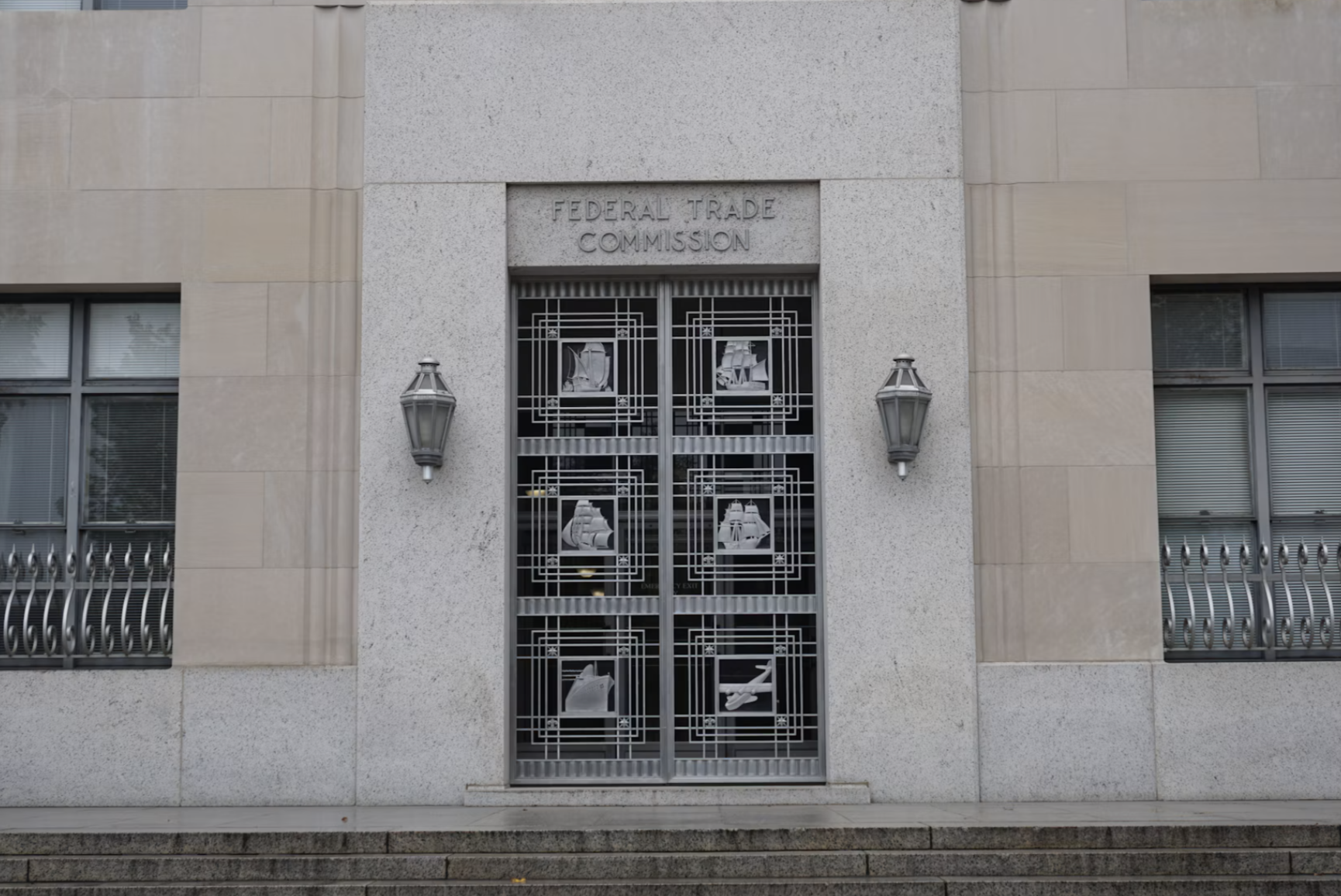
Rome LLP represents peptide merchants, compounding pharmacies, telehealth platforms, and research chemical suppliers on both the regulatory and payment processing sides of these issues. Eugene Rome and Bradley Cebeci have more than thirty years of combined experience litigating payment processing disputes, and that experience covers exactly the fact patterns described in this article: frozen reserves, wrongful terminations, miscoded accounts, and fee structures that do not hold up when examined against the actual contract. On the regulatory side, Rome LLP has handled a number of investigatory and enforcement actions by the Federal Trade Commission looking into sales activity, advertising issues and processing matters.
About Rome LLP
Based in Los Angeles, Rome LLP specializes in electronic payments litigation and complex business disputes nationwide. Eugene Rome and Bradley O. Cebeci alone have more than 30 years of combined experience litigating payment processing disputes. Rome LLP regularly represents “high-risk” merchants, sales agents, ISOs, payfacs, platforms, marketplaces, and acquirers, and routinely handles litigation and transactional matters on their behalf which traverse all aspects of payments law.
Contacts
Rome LLP
Eugene Rome, Esquire
[email protected]
(424) 484-5683
https://romellp.com/
Bradley O. Cebeci, Esquire
[email protected]